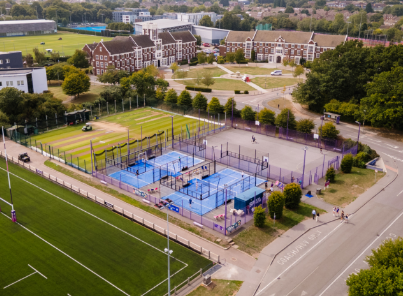




Soul Padel on Campus delivers on its five commitments to universities, including academic collaboration that has enabled distinction-level research into player motivations and social benefits.
Loughborough, UK – January 2026
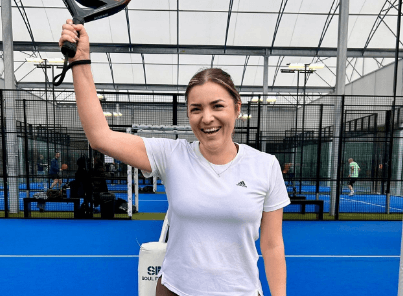
Soul Padel on Campus, now ten months into its partnership with Loughborough University, has delivered on one of its core commitments by supporting new academic research into padel participation in the UK. MA Sports Management student and elite Greek tennis player, Vasia Karvouni, has completed a distinction-awarded dissertation, “Why Choose to Play Padel? A Study Exploring Motivations and Social Benefits of Tennis Padel Participation in the UK”, with direct support from Soul Padel.
Soul Padel on Campus was created with five commitments that guide its partnerships with universities:
- Bringing the physical, social and health benefits of padel to campus communities through Soul Padel’s expertise in developing, building and operating successful clubs.
- Providing universities with a stable and proven revenue stream through an established commercially profitable model.
- Helping institutions bring more of the wider community onto campus.
- Offering meaningful and flexible student employment.
- Supporting academic research that improves understanding of sport, wellbeing and participation.
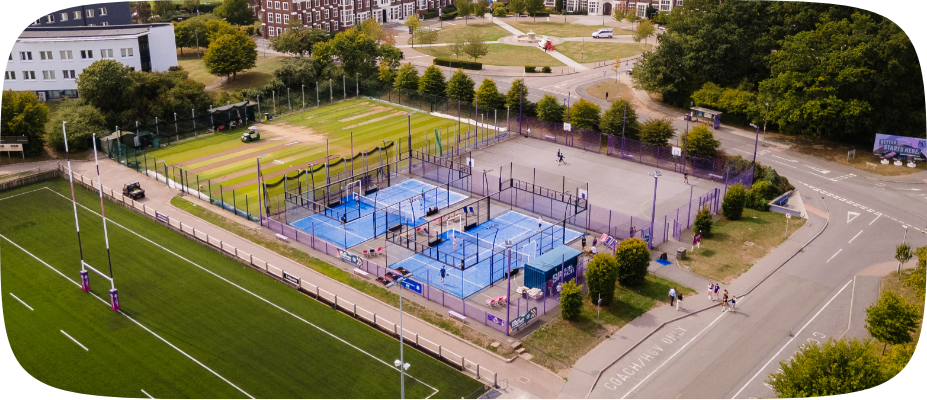
Loughborough University has been an early adopter of the programme, and its on-campus club has provided a setting for both community activity and structured academic study.
Vasia’s research fills a recognised gap in UK-focused padel scholarship, as most existing studies centre on performance and originate in Spain. By interviewing 20 participants, including students, university staff and local community players, her findings quantify several clear patterns:
Strong social value
- Every participant referenced padel’s social nature, with many describing it as more interactive than tennis due to the doubles format and small court size.
- Several interviewees identified padel as a way of combating isolation linked to remote working, post-COVID loneliness and stress.
- Participants reported using padel as a non-alcoholic social alternative, strengthening both new and existing friendships.
Psychological and emotional benefits
- Participants frequently described padel as a “mental reset”, “stress release” or “escape”.
- Many reported feeling noticeably better after playing, citing improved mood and reduced pressure compared with more competitive racket sports.
Rapid growth influencing participation
UK participation has risen from around 65,000 to more than 400,000 players between 2020 and 2024.
Court numbers have increased from 51 to 760 over the same period.
Participants commented that the sport’s growth created both motivation and visibility.
Accessibility and barriers
- Cost was the most commonly cited barrier. Some players had experienced courts priced up to £80 per hour, making padel feel exclusive in certain areas.
- Participants also highlighted equipment prices reaching £500 for some rackets.
- Weather and limited court availability were also referenced as restricting regular play.
- In this context, Soul Padel was repeatedly noted for affordability and community focus, which participants contrasted with more expensive operators.
Enjoyment and ease of play
- Participants emphasised the “fun”, “addictive” and “easy-to-learn” nature of padel, with many saying they improved quickly enough to stay motivated.
- Several players mentioned that mixed-gender and mixed-ability doubles helped sustain involvement.
The full dissertation, including detailed methodology, interview analysis and recommendations, will be available on the Soul Padel website for those wishing to explore the findings more deeply.
Reflecting on the collaboration, Vasia said she appreciated Soul Padel’s openness throughout the process. “They introduced me to players, staff and leadership, and encouraged me to explore the topic properly. Having that level of access strengthened the research and gave me a much clearer understanding of how people actually experience the sport.”
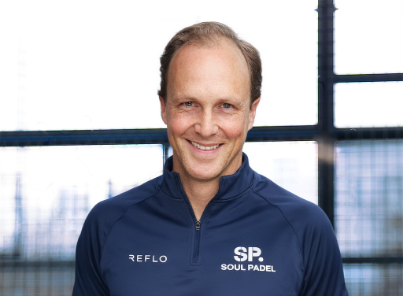
Mark Hewlett, CEO and Founder of Soul Padel, noted that academic collaboration has been a core part of the programme from day one. “If we want universities to get genuine value from Soul Padel on Campus, we have to support the areas they care about, and research is one of them. Vasia’s work gives us clear insight into what motivates players and what prevents others from getting involved. It helps us refine our own approach and gives universities a better understanding of how padel can contribute to student life and community engagement.”
As the programme continues its first year, Soul Padel is preparing to expand its work with partnerships at more universities across the UK. Academic collaboration, community access, student employment and a sustainable commercial model will remain central to these upcoming partnership launches, ensuring campus padel courts become places where people can meet, play and connect.
About Soul Padel
As the programme continues its first year, Soul Padel is preparing to expand its work with partnerships at more universities across the UK. Academic collaboration, community access, student employment and a sustainable commercial model will remain central to these upcoming partnership launches, ensuring campus padel courts become places where people can meet, play and connect.
For media enquiries, please contact:
Mark Hewlett
Email: mark@soulpadel.co.uk
Phone: 07961310078
Website: soulpadel.co.uk